


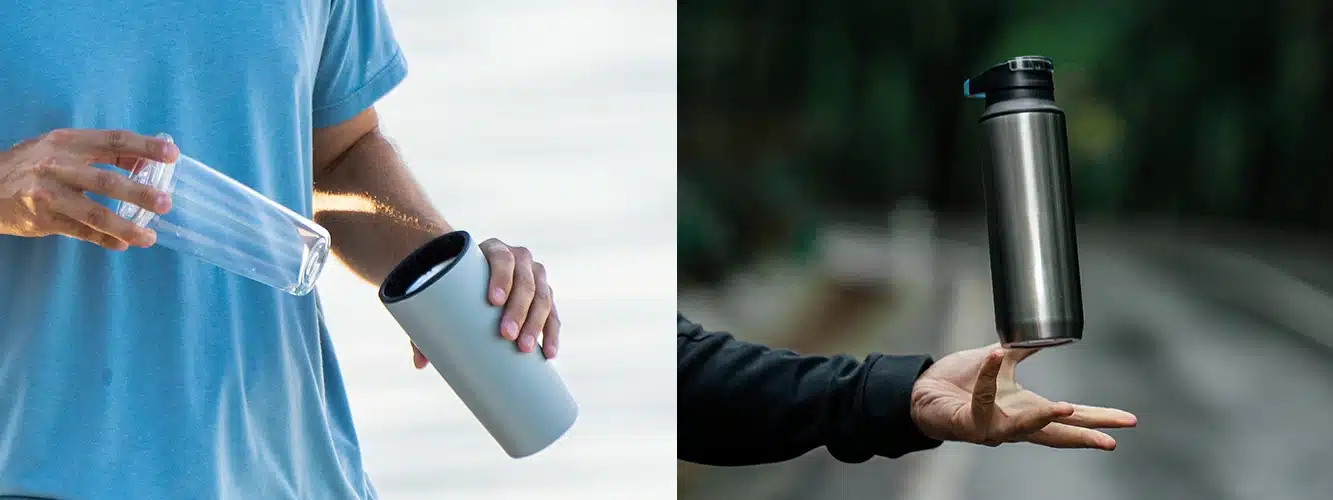
If you think drinking your morning coffee out of a paper cup isn’t bad for the environment, think again – while “true” paper products are fully biodegradable, the so-called “paper” cups most serve-to-go distributers prepare your drinks in are usually lined with a plastic coating that prevents them from being properly recycled, leading to significant waste and environmental damage as they end up in landfills. Further, the production and transportation of such cups consumes considerable energy and resources, contributing to carbon emissions.
In most cases, reusable mugs or tumblers are an eco-friendlier alternative to single-use cups because reusable tumblers can be used repeatedly, minimizing the amount of waste going into landfills. Producing reusable travel mugs also typically requires less energy and fewer raw materials compared to the continuous production of single-use cups, resulting in an overall lower carbon footprint. Moreover, there’s no real reason not to make the switch – even if you prefer getting your coffee out, most coffee shops are happy to prepare it in your personal travel mug for you. And if you opt for an insulated tumbler, you get the added advantage of enjoying your hot or cold drinks at the perfect temperature even longer!
What Material is Best for a Reusable Tumbler?
When choosing a reusable insulated tumbler, you should keep two things in mind: the impact the material it’s made of will have on your health, and the impact the material it’s made of will have on the environment.
Reusable insulated tumblers come in a variety of materials, but two of the most common are glass and plastic. It might seem counterintuitive to choose a plastic tumbler if your goal is to become more environmentally friendly, but as long as your tumbler is being used to replace regular single-use cups on a regular basis, it can definitely help cut down on waste. Additionally, plastic tumblers do have several advantages over materials such as stainless steel, ceramic and glass…they tend to be lighter, more resistant to cracking, chipping and+ shattering, and are usually cheaper.
But do these qualities actually make plastic a better choice than, say, glass for a reusable tumbler?
Let’s take a closer look:
Plastic vs. Glass: Which is Easier to Clean?
The short answer? Glass is easier to clean than plastic.
Plastic has a more porous surface than glass. It also scratches easier. These qualities create a surface area in which food, beverage and dirt particles can become trapped. Plastic’s surface area also makes it more difficult to get those particles out, leading to a buildup of unsightly stains and bacteria.
Another drawback to plastic tumblers – you may be stuck hand washing them. That’s because the high, sanitizing heat of the dishwasher is enough to melt some plastics (the same is true of the microwave). Even plastics labeled as “dishwasher safe” should be put in the top rack.
💡 Did You Know? The DUUN® Tumbler’s glass insert is dishwasher safe!
Plastic vs. Glass: Which Leaves Your Drinks Tasting Like They Should?
Plastic absorbs odors from food and beverages, which can affect the taste of your drinks down the road. Also, some plastics can leach chemicals into food, especially when heated.
Unlike plastic, glass is inert to flavors and odors. Its non-porous surface is very easy to clean and naturally antibacterial. Toxic chemicals aren’t used in manufacturing glass as they are in manufacturing plastic, so there’s nothing to leach into your drinks or soups. Made up only of sand, soda and limestone, glass does not absorb either smells or flavors. (This is why winemakers typically use glass bottles to store their products.)
💡 Did You Know? Stainless steel tumblers can cause your hot drinks to take on a metallic flavor, but the DUUN® Tumbler’s glass insert preserves the purity of your drink’s taste.
Plastic vs. Glass: Which is Better for Your Health?
Have you ever noticed that water sipped from a warm plastic bottle can taste and smell…well, funny? That’s because the polymers in the plastic bottle break down when exposed to heat. When this happens, the polymers leach chemicals into the air – and into your beverage. This is why you should never reheat a plastic tumbler in the microwave, or leave it in the car with the sun shining on it for a long period of time.
BPA, or bisphenol A, an industrial chemical used to make some plastics, has been linked a variety of negative health effects, including changes in brain and hormone function, elevated blood pressure and increased risk of diabetes, obesity and cancer. Opting for food and drink containers made from BPA-free plastic can be safer – maybe. The fact is that the safety of BPA-free plastics can depend on the specific chemicals used in the manufacturing process, and the effects of some chemicals found in BPA-free plastics haven’t yet been thoroughly studied. To be safe, the FDA recommends using glass containers and drinking vessels over plastic for food storage and serving. Glass is naturally BPA free, making it the safest choice.
💡 Did You Know? The DUUN® Tumbler’s controlled flow lid is made of BPA-free Tritan plastic. This plastic does not contribute to micro-plastic waste and is environmentally friendly!
Plastic vs. Glass: Which is More Durable?
While it’s true a glass bottle is more likely to break than a plastic bottle if dropped onto the ground, glass can withstand higher temperatures without breaking or deforming than plastic can. Glass is also safe for both hot and cold drinks – it can even be chilled in the freezer (though you wouldn’t want to do that with a carbonated beverage).
The DUUN® Tumbler’s glass insert is made from borosilicate. This specialty glassware is very durable and is formulated to have thermal shock resistance, meaning it can tolerate high heat without breaking or cracking.
💡 Did You Know? A durable, stainless-steel shell protects the DUUN® Tumbler’s borosilicate glass insert – which is also covered by a 1-year warranty!
Plastic vs. Glass: Which is Better for the Environment?
We now know that using glass drinkware is better for our health…but is it better for the health of the planet?
If you’re keeping your plastic tumbler for long-term use, the question might make you pause…after all, around half the plastic produced nowadays is meant for long-term use, and plastic typically has a lower carbon footprint than glass due to its lighter weight and production process. In addition, glass can be more expensive to recycle.
That said, glass is still the eco-friendlier option because it is fully recyclable, while plastic’s long-term breakdown into microplastics can be detrimental to the environment. Moreover, glass can be reused indefinitely without loss in quality or integrity, while plastic may not always be recycled effectively depending on its type and local recycling facilities.
Glass tumblers are designed to be reusable and can last for decades, making them very sustainable accessories. If your glass tumbler does develop a crack or you want to replace it, it has an unlimited recycling life, unlike a plastic tumbler which can contribute to plastic waste in landfills and oceans if not properly disposed of. Glass is made from natural, readily available materials, takes 40% less energy to form into new glass, and is widely used in the renewable energy industry.
💡 Did You Know? Wyldr is moving to a more sustainable future with recycled and environmentally friendly materials when available.
To Sum Up
When comparing the environmental impact of glass tumblers versus plastic tumblers, glass generally has a lower environmental footprint due to its high recyclability and ability to be reused indefinitely, while plastic, especially single-use plastic, contributes significantly to waste and pollution, even if labeled as “BPA-free.” When comparing glass tumblers to plastic tumblers for health, glass is generally considered the better choice because it is inert, meaning it doesn’t leach harmful chemicals into your drinks like plastic can, especially when exposed to heat, making glass the safer option for your health.
The verdict is in: when it comes to your health and the health of the planet, glass is the clear winner over plastic. When you opt for a DUUN® Tumbler you’ll be a winner, too!