


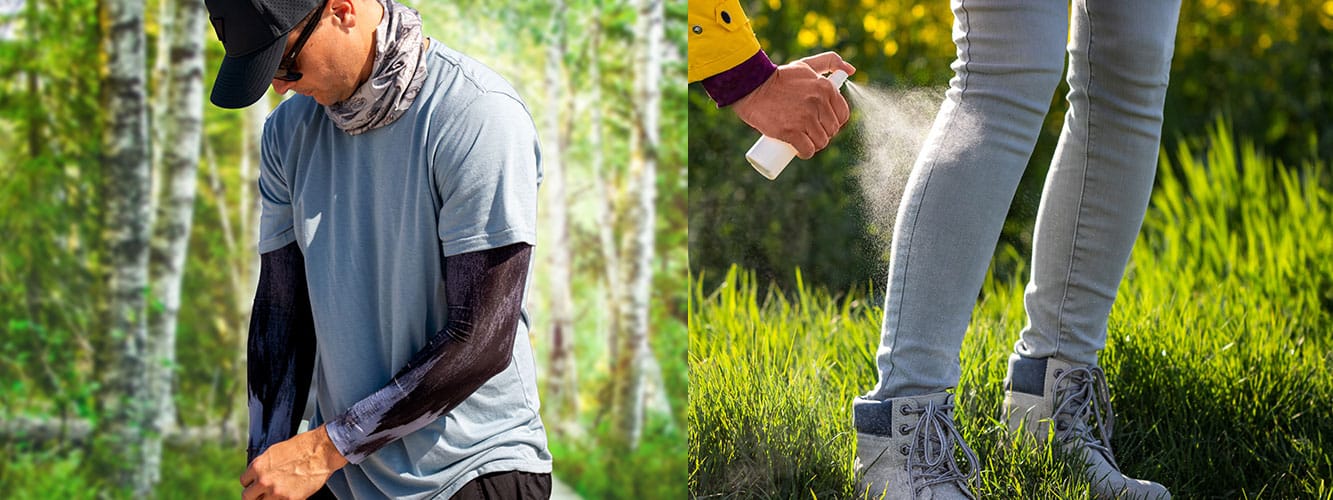
I love hiking, but I hate ticks – and I mean really, really hate them. Ticks combine two phobias of mine: things that stick in your skin (I have no problem having my blood drawn at the doctor’s office so long as I don’t have to actually see it happening) and spiders (like spiders, ticks are arachnids and have just as many creepy legs).
But in truth, the idea of an eight-legged creepy crawly sticking its head in my skin is not nearly as scary as some of the diseases ticks can spread to humans – diseases with symptoms that range from mild to life-threatening if not treated promptly, such as Lyme Disease, Rocky Mountain Spotted Fever, Anaplasmosis and even (in some areas) tick paralysis.
Different diseases are borne by different ticks, but regardless of the type it’s always best to remove an embedded tick as quickly and safely as possible (and no, using a match or nail polish is not a good way to dislodge a tick that has embedded itself in your skin, as this can cause the tick to release harmful fluids – the best way to remove a tick is to grasp it with a pair of fine-tipped tweezers as close to your skin as possible, then pull upward with a steady, even motion, taking care to avoid twisting or squeezing the tick). Better still is to avoid getting a tick on you in the first place. Fortunately, there are effective steps you can take to help reduce your risk of getting a tick bite while still enjoying the great outdoors.
Ways to Keep Ticks at Bay
They say an ounce of prevention is better than a pound of cure, and taking steps to prevent ticks from getting under your skin before you head out the door is key to avoid getting a tick-borne illness:
Step 1. Know where (and when) ticks are likely to be lurking so you can be on the alert.
Ticks are typically most active during the warmer months, specifically from April to September. Be sure to research the area where you plan to spend time outdoors to find out when ticks are likely to be prevalent.
One good thing about ticks is that they can neither fly nor (contrary to popular belief) jump. Instead, ticks climb up vegetation and wait for a host to brush by, at which point they attach themselves. This means you should be wary when walking amid tall grass, trees, shrubs, and fallen leaves, as well as when doing gardening or yard work. When hiking in the forest, you should stick to the center of the trail to avoid brushing up against plants whenever possible and avoid densely wooded and brushy areas.
This is not to say hard surfaces are always safe – ticks have been known to lie in wait for potential hosts on large rocks, picnic tables and park benches, so be sure to look over a potential sitting place before you stop to rest.
Step 2: Apply tick repellent.
Tick repellant can go a long way toward deterring ticks. Different types of repellent vary based on effectiveness and use.
Clothing (including footwear) and hiking gear can be treated with 0.5% permethrin, a synthetic pyrethroid that kills and repels ticks. Apply permethrin to clothing and gear before putting it on, being sure to follow the directions on the label carefully. You should never apply permethrin to your skin.
Conventional chemical repellents applied to the skin can be very effective in deterring ticks. These usually contain DEET, picaridin, or other EPA-registered active ingredients. While more modern formulas are designed to be less harmful to the environment, chemical repellents can still be harmful to both water sources and wildlife and should be used with care.
While not as effective or long-lasting in deterring ticks as chemical repellents, all-natural repellents work well when applied regularly and are better for the environment (and for you). You can buy all-natural repellents ready-made or mix up a batch of your own (a more cost-effective option over time, I’ve found) using essential oils and other simple ingredients you have on hand. An easy recipe I like to prepare at the start of tick season includes mixing together in a spray bottle a mixture of 10-15 drops of lavender, rose geranium and eucalyptus (which works great for warding off mosquitoes and flies as well as ticks), water and/or coconut oil for a carrier. I like to use it on my skin, clothes and knapsack (in areas where ticks are known to be abundant, I’ll even spray it on my hands, then run my fingers through my hair). In addition to offering a chemical-free way to repel ticks, it also smells nice!
Step 3: Dress for success.
Tick repellent is a great ally in the war on bites, but whether natural or conventional it has its drawbacks. That all-natural repellent I make myself? I have to admit, it can leave me feeling a bit oily. As for conventional repellents…well, apart from not liking to expose myself to more chemicals than I have to, I find they don’t always smell that great. And whatever repellent you use, depending on how long you’re out you’re probably going to have to reapply it at least once, which can be a pain.
Using clothing to guard your skin against ticks eliminates all these problems and is a more consistent option as well. Choosing light-colored clothing helps you to spot any ticks that may be crawling on you, while long-sleeved shirts, long pants and head coverings act as protective barriers since ticks can’t bite through most types of fabric. Many outdoor experts recommend tucking your pants into your socks to ensure ticks don’t sneak in under your clothes (I wear trail leggings or trail tights when I hike, so this doesn’t look as stupid as it sounds).
One downside to long pants and long sleeves is temperature – as it happens, the time you have to worry about ticks most tends to be the warmest times of the year (high temperatures and high humidity are ideal for tick reproduction and survival). If you plan to spend a lot to time outside, you’ll want to choose comfortable, moisture-wicking clothing in synthetic fabrics to help beat the heat. Other good options include lightweight synthetic clothing items you can put on and take off as needed, and this is where the good folks at Wyldr come in.
Hoorag® Neck Gaiters from Wyldr are closed fabric tubes designed to cover your neck, head, and/or face (depending on how you choose to wear it – one neck gaiter can be worn over a dozen different ways; check out the video here).
Made of lightweight, recycled materials that are soft, breathable, and feel cool against your skin, Wyldr Hoorag® Gaiters won’t overheat you even on the hottest summer days – in fact, they’ll make you feel cooler because they dry fast, wick sweat off your skin, and protect you from the sun’s rays. Both the Original Hoorag® Full Neck Gaiter and the Hoorag® Half Gaiter have built-in UV protection, so in addition to being protected from ticks, you’re also protected from sunburn when you wear one.
Arm Sleeves from Wyldr offer another effective way to separate ticks and your skin. If a hot day tempts you to go short sleeved or sleeveless, Wyldr’s easy-to-don Arm Sleeves go on in a second should you find yourself moving through a woodsy area where ticks are sure to congregate. And like the Hoorag® Gaiters they have built-in UV protection, so you may want to pull them out in direct sunlight, too. The breathable, recycled material helps you stay cool while protecting you from nasty bug bites, and when you’re in the clear it’s a simple matter to take your arm sleeves off and stow them in your pack or pocket.
A big plus both Hoorag® Gaiters and Arm Sleeves from Wyldr have in common is their portability. Easy to put on, easy to take off, the room they take up in your backpack is negligible. They’re so lightweight you won’t notice that you’re carrying them, but you’re sure to miss them if you don’t! Both Arm Sleeves and Neck Gaiters come in a variety of fun colors and styles.
Once You’re Back Inside…
Even when taking the above precautions, you still should check your clothes and body for ticks periodically while you’re out, especially if you’re doing yard work, walking in wooded areas, brushing against tall grass or sitting on rocks, logs or picnic benches. Keep in mind that ticks can hide in hard-to-see areas like your back, behind your knees, under your arms or in your hair – if you’re with someone else you should check each other, as well as your kids or pets if you have them outside with you. Check yourself again as thoroughly as possible before going back indoors to ensure ticks don’t come inside with you, where they’ll lie in wait until a person comes along to whom they can attach.
Once indoors, undress yourself and check your whole body for ticks. Use a mirror or ask a family member to help you check hard-to-see areas on your body. A good place to do a full-body check is the shower – showering as soon as possible after you go inside is a great way to wash away any ticks that could be on your head or body.
As soon as possible, throw the clothing you wore outside into the dryer and run it on hot for ten minutes (twenty minutes if wet); this will kill any ticks that may have gotten on your clothes and that you may have missed. You can then wash your clothes as usual.
Finally, continue checking your body and your bedding for three days after you’ve been outside in an area known for having lots of ticks, as some tick varieties are very small and hard to see (and so easy to miss). Check your pets and children, too.
Let Wyldr help you make the most of your outdoor adventures, and have a great, SAFE summer!